
Electrician Near Me Near Purity Springs Park in Tampa
Why Purity Springs Park Residents Visit Us
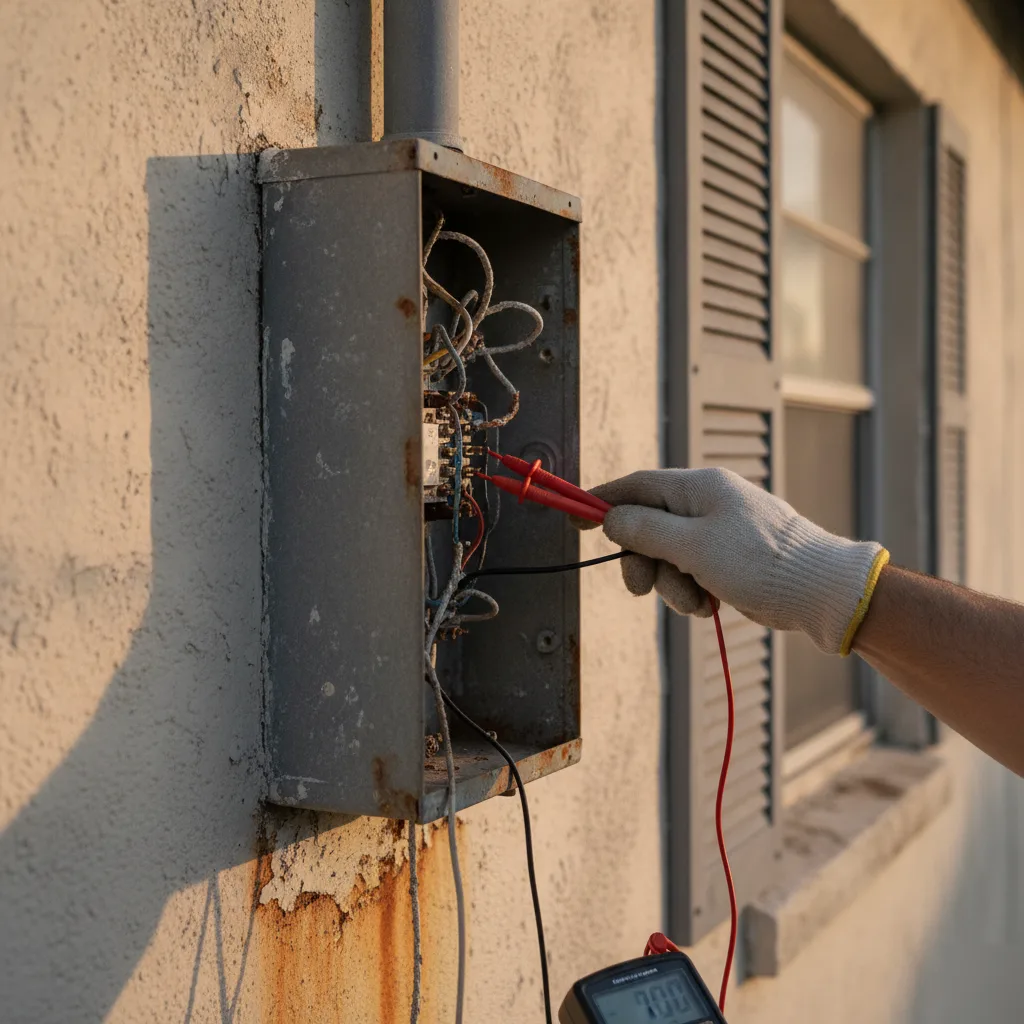
We work these streets more than most folks realize. Our trucks roll past Purity Springs Park almost every week, and we know the difference between a 1960s ranch on one block and a 1980s addition two streets over. That matters when you’re talking about wiring. A house built around 1972, which is the typical build year in this tract, usually still has its original panel or one that’s been patched a dozen times since.
Most homes near the park are owner-occupied, and folks who own tend to fix things right instead of putting a bandage on them. We see that mindset a lot here. Someone calls about a flickering light, and it turns out the whole circuit needs attention. We’d rather tell you that upfront than have you call us back in six months.
The neighborhood is mostly single-family houses, not condos or apartment rows. That single-family character shapes almost every job we take on around here:
- Electrical panel upgrades for homes still running on outdated fuse boxes
- Home rewiring for houses with the original 1970s-era wiring
- Ceiling fan installation and outlet installation for room additions and updated kitchens
- GFCI outlet installation in bathrooms and older kitchens that never had it
- Surge protection installation for families who’ve lost appliances to Tampa storms
A lot of our calls near Purity Springs Park start the same way. A homeowner’s remodeling a bathroom or finally replacing that avocado-green kitchen, and they discover the wiring behind the walls hasn’t been touched since Nixon was in office. We walk through it, explain what’s safe to keep and what needs replacing, and go from there. No guessing games.
Renters make up a good chunk of the area too, more than a third of households near the park. Landlords call us for electrical safety inspections between tenants, or when a circuit breaker keeps tripping and nobody can figure out why. We’ve fixed enough of those calls to know it’s usually an overloaded circuit from window units and space heaters stacked on old wiring.
The median home value here sits around $225,500, and people take pride in keeping these places up. That’s part of why we get calls for things like chandelier installation or under cabinet lighting, not just emergency fixes. Folks want their homes to look good and work right.
We’re not driving in from across town to figure out your neighborhood on the fly.
And that’s the real difference. We already know which blocks near the park have aluminum wiring from certain eras, which streets tend to have older breaker boxes, and what kind of storm damage shows up after a bad Tampa summer. That local memory saves you time and saves you from paying for troubleshooting we’ve mostly already done in the house next door.
Getting to Us from Purity Springs Park
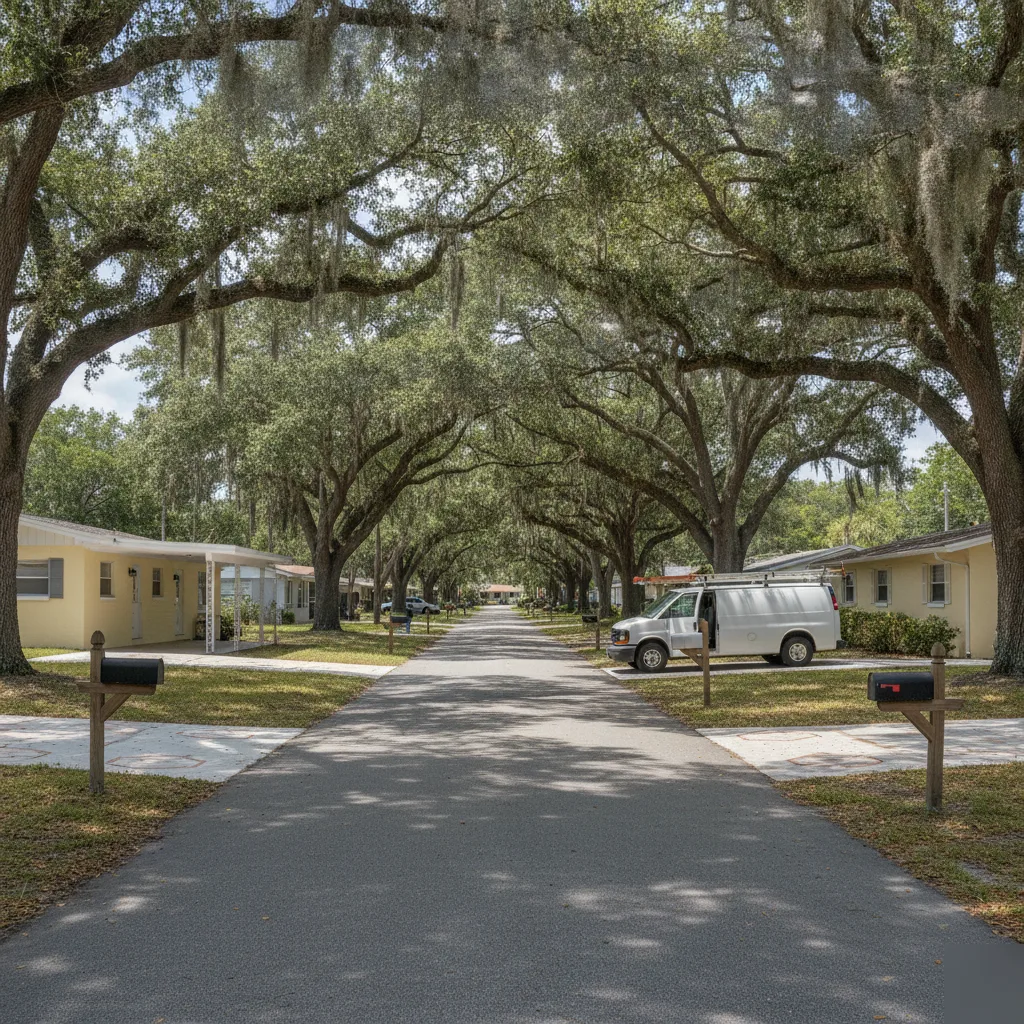
Our shop sits at 110 W Hanlon St, and, Purity Springs Park is close enough that we sometimes just walk the job site first before pulling the van around. We’re talking about a 0.4 mile drive, maybe a minute if the light at the corner cooperates. That’s not marketing talk. That’s just how the map lays out.
When a call comes in from a house near the park, we’re not mapping out some cross-town route. We know these blocks. We know which streets narrow up near the older sections, where the driveways sit close to the curb on those homes built back around 1972. So the drive itself is simple, but here’s roughly how our team gets from the shop to your door:
- Head northwest out of the Hanlon St lot toward the main corridor that feeds into the Purity Springs Park area.
- Cut through the residential grid just south of the park, past the mix of single-family homes that make up most of this pocket of Tampa.
- Turn onto the street that runs along the park’s edge, slowing through the stretch where kids are usually out and driveways are tight.
- Pull up right at your place, tools already staged, because the short drive doesn’t give us much time to double-check the truck.
That last part matters more than people think. A ten-minute drive gives a crew time to review the job notes again, grab a forgotten part, whatever. A one-minute drive doesn’t. So we load the van like we’re already there, because we basically are.
This closeness shows up in the little things. If we’re mid-panel-upgrade on one street and a neighbor two doors down near the park calls about a tripped breaker, we can usually swing by same day. And if you’re near the cross street by Nebraska Ave on the east side of the park, that’s still well within the same short hop for us. We’re not stretching a service area thin here. We’re working a neighborhood we already know block by block.
Older homes in this tract also mean we’re not guessing at what we’ll find when we open a panel. A lot of the wiring and boxes we run into near the park match what you’d expect from a house built in the early ’70s, and we’ve worked on plenty of them. That familiarity cuts down on surprises once we’re inside.
But being close isn’t just about speed. It’s about knowing the area enough that we don’t need a GPS voice telling us where to turn. We’ve driven past Purity Springs Park more times than we could count, on our way to jobs, back from parts runs, whatever. So when someone near the park calls, the trip over isn’t really a trip at all. It’s just the next stop on a street we already know well.
What Older Single-Family Homes Need for Electrical Upgrades
Walk down almost any street near Purity Springs Park and you’ll notice the same thing we do. These homes were mostly built around 1972. That’s not old enough for knob-and-tube wiring, but it’s old enough for panels that were never built to handle what a modern house needs.
Back then, nobody planned for two window units, a home office setup, and an EV charger all pulling power at once. So the panel that came standard in a 1972 build is often maxed out before you’ve even added anything new. We see this constantly on service calls in this area, breakers tripping for no obvious reason, outlets that feel warm to the touch, lights that dim when the AC kicks on.
About 83% of the homes in this tract are single-family detached houses. That matters because it means most of the electrical work here isn’t shared wiring or building management companies making the call. It’s homeowners deciding for themselves when to fix a flickering light or finally deal with that one outlet in the kitchen that never worked right.
A few things we run into again and again around Purity Springs Park:
- Original panels rated too low for today’s appliance load, often needing an electrical panel upgrade or breaker box upgrade
- Kitchens still running on circuits from decades ago, which is where a kitchen electrical upgrade usually starts
- Bathrooms without GFCI protection, an easy fix but one that gets missed for years
- Aluminum wiring in a handful of the older sections, which calls for aluminum wiring replacement rather than a patch job
- Homeowners adding ceiling fans or new lighting fixtures during a renovation, and finding the old wiring can’t keep up
We had a job a few streets over from the park last year. A homeowner was renovating her kitchen and wanted under cabinet lighting installed. Simple enough. But once we opened the wall, the wiring behind it was original to the house. We ended up doing a small home rewiring section just for that wall, plus adding a dedicated circuit. She hadn’t planned for that. Most people around here don’t, until an electrician opens things up and shows them what’s behind the drywall.
With median home values sitting around $225,500, a lot of folks near the park are thinking long-term about their houses, not flipping them. That changes the kind of work we recommend. We’re not patching things to get through an inspection. We’re doing electrical repair and upgrades meant to last another twenty years in a house that’s already stood for fifty.
And because most homeowners here own rather than rent, roughly 64% owner-occupied in this tract, decisions about electrical work usually rest with the person living in the house. No landlord to call, no waiting on approval. Just a homeowner who wants it done right the first time.
We’re out here often enough to know which streets tend to have the older subpanels and which ones got upgraded a decade back. That local knowledge saves time on a service call, since we’re not starting from zero every visit.
Frequently Asked Questions
What should I know before scheduling electrical work near Purity Springs Park?
Most homes near the park were built around 1972, so expect an older panel or wiring that’s been patched over the years. Since most houses here are single-family and owner-occupied, we usually find original wiring behind the walls during remodels. We’ll walk you through what’s safe and what needs updating before we start.
Is there parking available if I visit your shop from Purity Springs Park?
Yes, parking is easy at our Hanlon St location, just a short hop from the park. Since we’re so close to your neighborhood, most residents near Purity Springs Park just call ahead, and we come to you instead. That saves you the short drive altogether.
Driving Directions to Purity Springs Park
Our Location: 110 W Hanlon St, Tampa, FL 33604
How long does it take to get to your shop from Purity Springs Park?
It’s about a one-minute drive, roughly 0.4 miles northwest. Our shop on Hanlon St sits close enough that we often check the job site before even pulling the van around. That short distance means less time in traffic and more time working on your electrical issue.